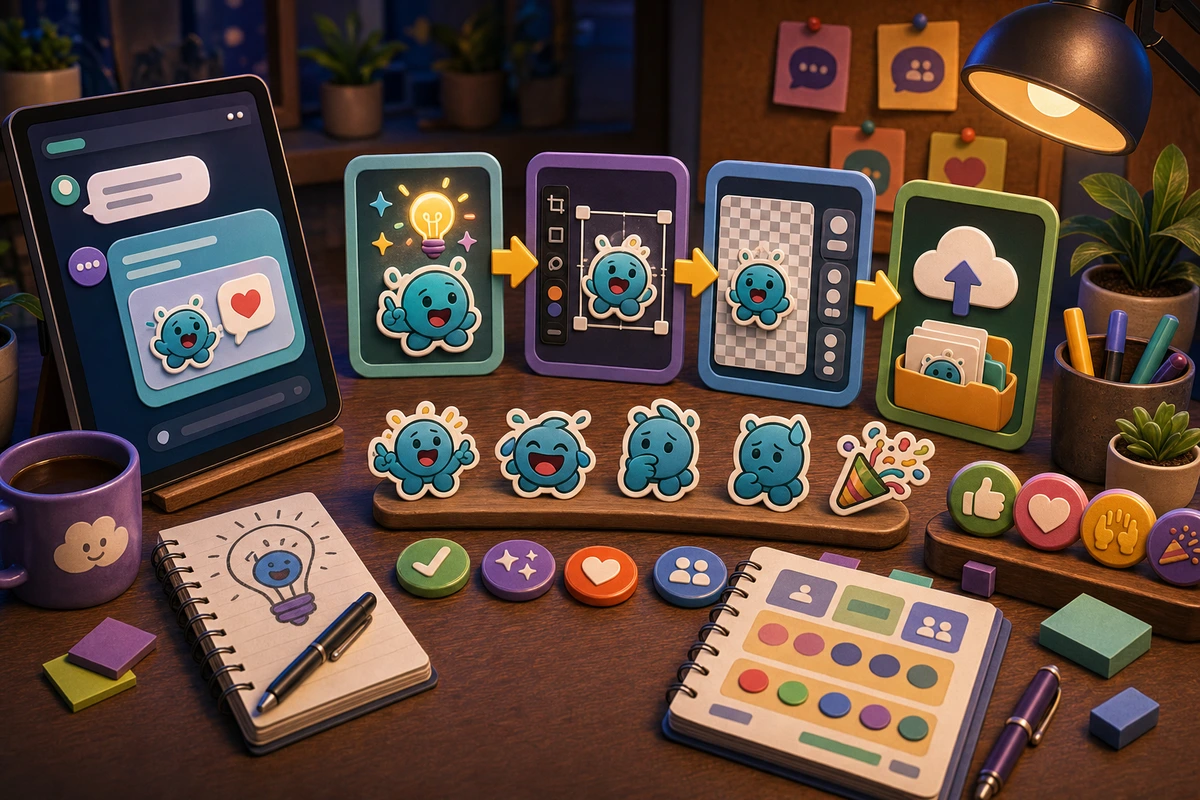
ChatGPT Image to Slack Emoji Workflow
Turn generated image concepts into Slack-ready emoji by simplifying art, cropping, resizing, shrinking, naming, and testing uploads.
Short answer
A ChatGPT image to Slack emoji workflow should be planned around repeatable chat moments, not decorative filler. Start with Generate one simple concept., Crop to the subject., Remove or simplify the background., Resize for Slack., then add niche reactions only after the first set is getting used. Ask for a single subject on a simple background, then crop tightly and remove extra detail before upload.
Who this is for
This guide is for Slack admins, team leads, marketers, and operators creating custom emoji from generated images.
Recommended starter set
Generate one simple concept.
Crop to the subject.
Remove or simplify the background.
Resize for Slack.
Test static before animation.
Upload with a useful name.
Workflow
Step 1
Choose the real moments
Use image generation for concepting, then handle Slack-specific sizing and readability as a separate production step. A smaller set tied to repeated behavior will outperform a large set of pretty reactions that nobody remembers to use.
Step 2
Create a shared visual rule
Ask for a single subject on a simple background, then crop tightly and remove extra detail before upload. Keep one crop, outline weight, palette, and background approach so the pack feels intentional.
Step 3
Launch with usable names
Choose names that teammates will type in workflow threads, such as shipped, blocked, thanks, or welcome. Upload a first set, announce the names, and watch what people actually use before expanding.
Quality checklist
- Choose reactions that map to real Slack moments.
- Keep the subject large enough to read at chat size.
- Use one naming convention across the whole pack.
- Export a static fallback for any important animated reaction.
- Slack is strict on file size, so reduce motion and detail before upload.
Common mistakes
- Making the pack too broad before the first Slack upload.
- Letting tiny details carry the meaning.
- Using names only the creator understands.
- Skipping a final grid review before upload.
- Uploading large AI images without cleanup.
- Using text that becomes unreadable in Slack.
- Animating every generated image by default.
Next steps
FAQ
What should be in a chatgpt image to slack emoji workflow?
Start with Generate one simple concept., Crop to the subject., Remove or simplify the background., Resize for Slack.. Those cover the moments people are most likely to repeat. Add niche reactions only when the core set is already being used.
Should a chatgpt image to slack emoji workflow use animation?
Use animation for thanks, shipped, launch, and celebration reactions. Keep status, moderation, and text-heavy reactions static unless motion makes the meaning clearer.
How do I get people to use the pack?
Choose names that teammates will type in workflow threads, such as shipped, blocked, thanks, or welcome. Announce the pack with the exact names, model the reactions in real conversations, and remove weak items after a usage review.