chronark
@chronark
"this is the best website ever"
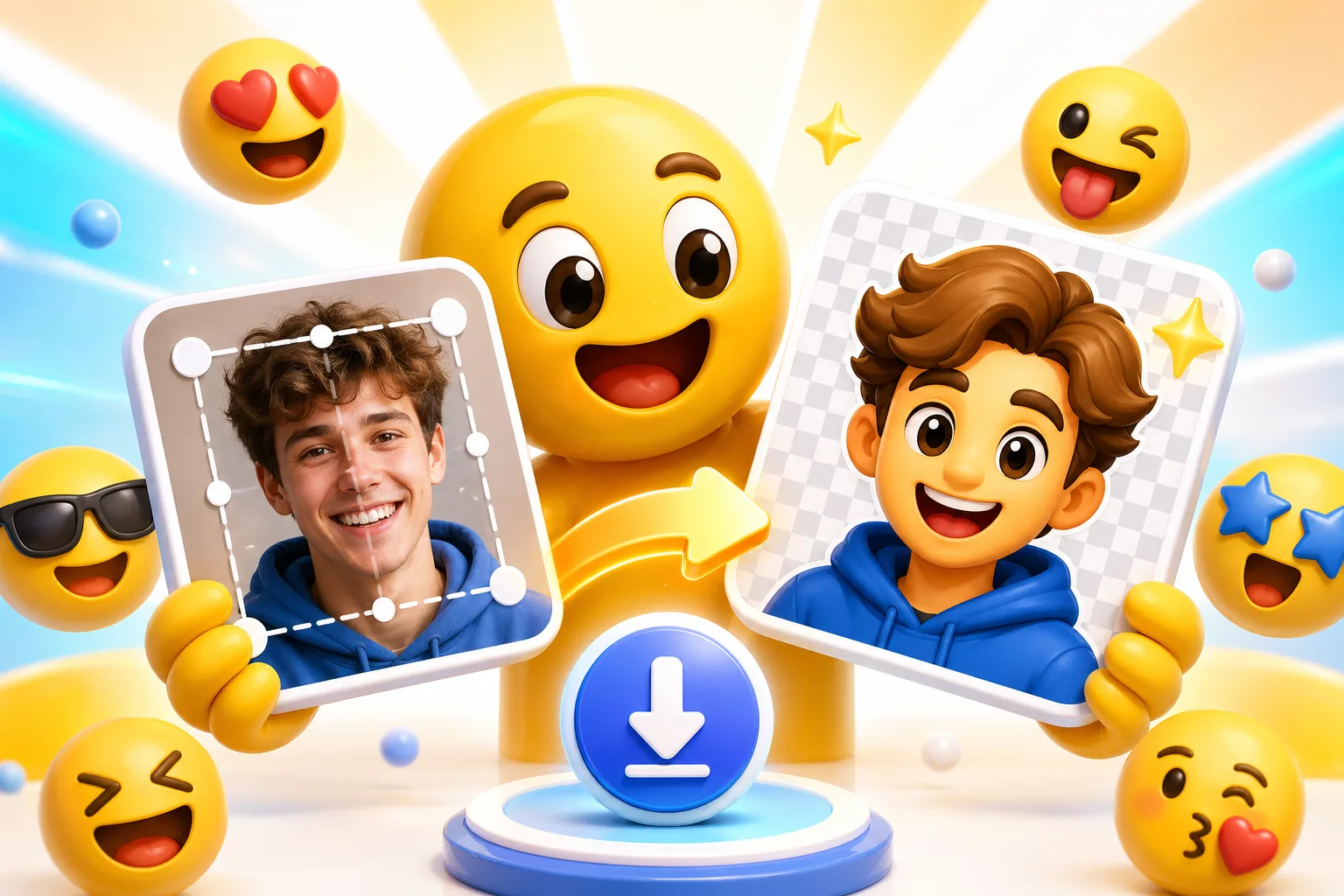
The fastest image-to-emoji workflow is simple: upload the file you already have, tighten the crop until the subject reads at tiny size, preview it like a real emoji, and export the format that fits the destination.
This page is for people who already have the image and want emoji-ready output, not a long design tutorial or a generic resize tool.
Photos, pictures, PNGs, JPGs, screenshots, and simple logo art can all become emojis when the subject is clear enough to survive the crop.
Crop, transparency cleanup, and background control matter because the final result has to read inside a tiny square in chat.
The download help stays grounded in Discord, Slack, and Twitch constraints so you can leave with a usable file instead of a rough draft.
Photos need more cleanup than already-transparent art, but they convert well when one face, object, or pet clearly dominates the frame.
A picture becomes a good emoji only when the subject still reads after downscale. These examples show the kinds of picture-to-emoji outcomes that survive real chat use.
Tight pictures with large facial features turn into stronger reactions than loose portraits.
Simple shapes and high contrast survive picture-to-emoji conversion better than detailed brand systems.
Pet pictures work when the face fills most of the square instead of showing the whole body.
If the picture needs motion, keep the loop short enough for Discord or Slack limits.
PNG is the cleanest export path for most static emoji because it preserves hard edges and transparency. Use PNG first when the converted image does not need motion.
| Target | Format | Dimensions | Size Limit | Upload Path | Common Failure |
|---|---|---|---|---|---|
| Transparent PNG for Discord | PNG | 128 x 128 export | 256 KB | Server Settings > Emojis | The PNG keeps too much empty padding, so the emoji looks small in chat. |
| Transparent PNG for Slack | PNG | 128 x 128 export | 128 KB | Customize workspace > Emoji | The crop is too loose or the edges are messy after background cleanup. |
| PNG ready for animation | PNG | Square export with clean edges | Keep the silhouette clean before motion | Use as source for animated emoji workflow | Background fragments or soft edges create worse artifacts once the asset is animated. |
JPG files usually need the most cleanup because they arrive with flat backgrounds, screenshots, or camera noise. These are the kinds of JPG-to-emoji conversions that turn out well.
A loose JPG selfie becomes usable once the face fills the frame and the background is dropped.
Crop to the eyes and muzzle instead of keeping the whole body or the full room around the pet.
Choose the single expression that carries the joke instead of trying to preserve the entire screenshot.
Simple JPG logos can work after you separate the mark from the flat background and center it on a square.
Picture-to-emoji conversions work better when you isolate one person rather than keeping a whole group in frame.
A mascot or product image converts best when the outline is bold enough to survive tiny display sizes.
Once the conversion looks right, pick the export path that matches the destination. Discord gives you a little more room for motion, while Slack rewards smaller, simpler files.
Discord supports static and animated custom emoji, so start from a clean square export and watch the 256 KB ceiling.
Slack works best with crisp static PNGs and very short GIF loops because the upload ceiling is tighter at 128 KB.
Yes. Photos are one of the most common starting points for emoji conversion. The key is tightening the crop until one face, object, or pet clearly carries the reaction.
PNG usually gives you a cleaner path because it preserves transparency and hard edges. JPG works too, but JPG-to-emoji conversions usually need more background cleanup before export.
Yes. Pictures, screenshots, and meme frames can all work as emoji sources when you isolate the one expression or object that still reads after downscale.
Discord and Slack usually want a 128 x 128 square export. Twitch needs exports at 28, 56, and 112 pixels.
Yes, provided you export to an animated format and the destination platform supports animation. You may still need to shorten or simplify the motion to fit size limits.
Discord Emoji Maker
Use the Discord page when the converted file is headed into a server emoji slot next.
Slack Emoji Maker
Use the Slack page for the tighter 128 KB limit and workspace upload guidance.
Twitch Emote Maker
Jump to the Twitch page when the finished emoji needs the 28, 56, and 112 export set.
Emoji Maker
Use the broader emoji page if you want the full static and animated overview around this converter.
Animated Emoji Maker
Best when the image you upload already needs a loop instead of a still export.
AI Image to Animated Emoji
Use this when the source file is clean and ready for Super Animation.
Trusted by creators
Used by over two million creators worldwide, including streamers, developers, teams, and community builders.
Convert Your Image into an Emoji
Upload a photo, picture, PNG, or JPG and export an emoji-ready file with chat app sizing.