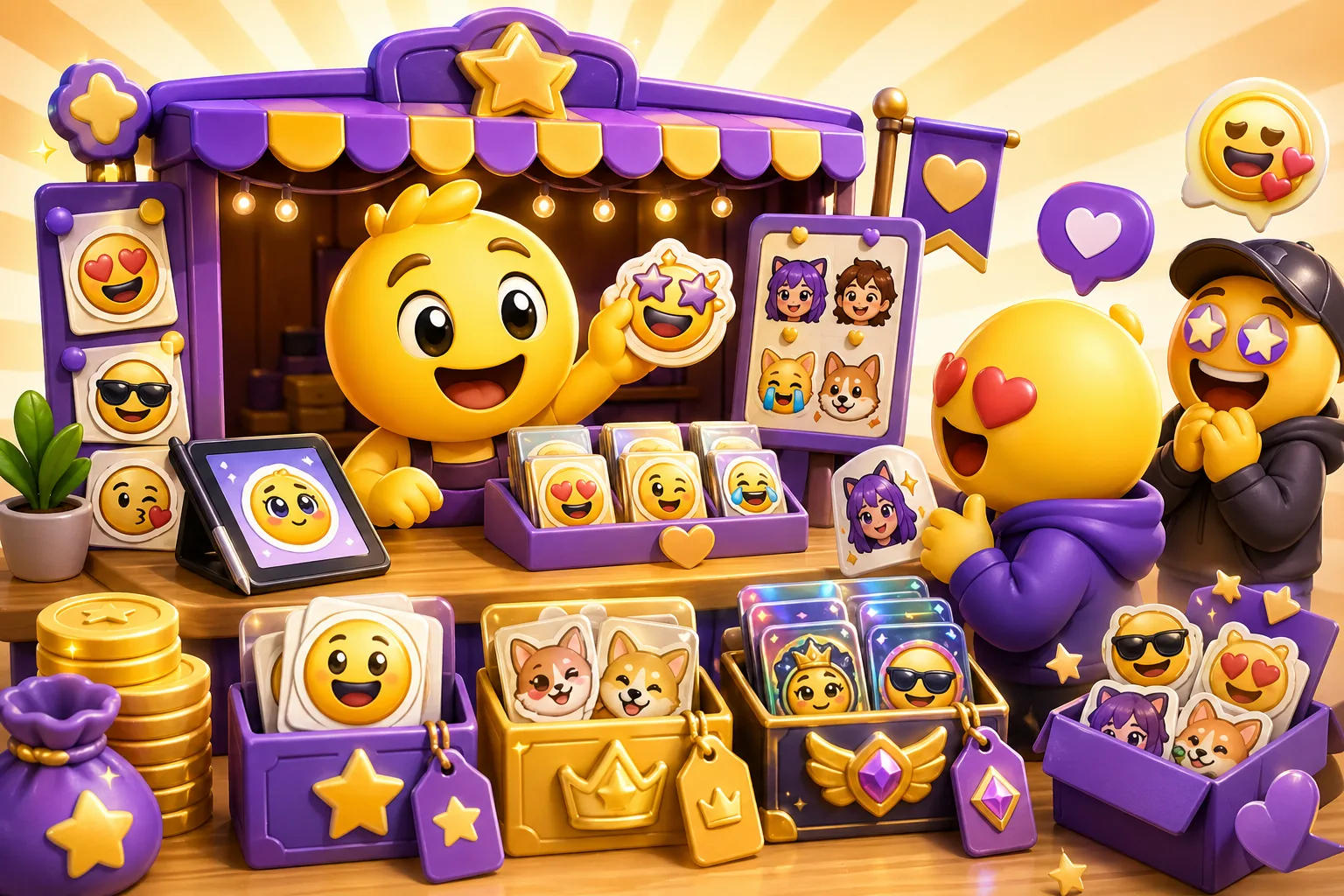
Monetizing Custom Emojis (Kofi, Patreon, Commissions)
How to make money creating custom emojis through commissions, subscriptions, and marketplaces.
You've been creating custom emojis for your Discord server and getting compliments. People ask where you got them, and you realize there's demand for custom emoji design. Can you actually make money from this? Yes—emoji creators earn income through commissions, marketplaces, subscriptions, and direct sales. Understanding pricing, finding clients, and building a sustainable business model turns emoji creation from a hobby into income.
Commission-based emoji creation
Commission work is the most common way emoji creators make money. Clients hire you to create custom emojis for their Discord servers, Twitch channels, or Slack workspaces. You discuss requirements, agree on pricing, create the emojis, and deliver files. This model gives you direct client relationships and control over pricing, but requires finding clients and managing projects.
Pricing commissions depends on complexity, quantity, and your experience. Simple static emojis might cost $5-15 each. Complex animated emojis can cost $25-50 each. Full emoji sets (10-20 emojis) often get bulk discounts (20-30% off per-emoji pricing). Your experience level matters—beginners charge less, experienced creators charge premium rates. Research what other creators charge to understand market rates, but don't undervalue your work.
Finding commission clients requires marketing yourself. Post your work on social media, Discord servers, Reddit communities, and art marketplaces. Create a portfolio showcasing your best emojis. Join communities where people need emojis (Discord server owner communities, Twitch streamer forums, etc.). Word-of-mouth referrals are powerful—satisfied clients recommend you to others. Building a reputation takes time but leads to steady work.
Pricing strategies and considerations
Calculate your hourly rate to set fair pricing. Estimate how long each emoji takes to create (design, revisions, export, communication). If a simple emoji takes 30 minutes and you want $20/hour, charge $10 per emoji. Complex animated emojis might take 2-3 hours, so price accordingly. Don't forget to factor in time spent on client communication, revisions, and business management—these are part of the work even if they're not directly creating emojis.
Offer tiered pricing packages to appeal to different budgets. A basic package might include 5 simple static emojis for $50. A premium package might include 10 animated emojis with unlimited revisions for $300. Packages make pricing decisions easier for clients and help you sell more per transaction. They also set expectations about what clients get at each price point.
Charge extra for rush orders, complex requirements, or commercial licensing. If someone needs emojis in 24 hours, charge a rush fee (20-50% extra). If they want commercial rights to use emojis in products or marketing, charge a licensing fee. If they want source files or multiple formats, charge for that. Don't give away extras for free—your time and skills have value.
Require deposits before starting work (typically 50% upfront). This protects you from clients who disappear after you create emojis, and it shows clients are serious. The remaining 50% is due upon delivery. For larger projects, consider milestone payments (25% upfront, 25% at midpoint, 50% on completion). Clear payment terms prevent disputes and ensure you get paid for your work.
Emoji marketplaces and stock sales
Sell emojis on marketplaces like Etsy, Gumroad, or specialized emoji marketplaces. Create emoji packs (themed collections like "Gaming Emojis" or "Workplace Reactions") and sell them as digital downloads. This passive income model lets you create once and sell multiple times, but requires marketing to drive sales. Marketplaces handle payment processing but take fees (typically 5-15%).
Stock emoji sales work best for generic, widely-applicable designs. Gaming emojis, reaction faces, workplace emojis, and seasonal content sell well because many people need them. Niche or highly-specific emojis have smaller markets. Create multiple variations and styles to appeal to different buyers. Bundle related emojis into packs to increase average order value.
Price stock emojis competitively but don't race to the bottom. $5-15 for a pack of 10-20 emojis is reasonable. Premium packs with 50+ emojis can charge $20-40. Research what similar products sell for, but focus on quality over competing on price alone. Better-designed emojis can command higher prices even if cheaper alternatives exist. Your reputation and portfolio quality justify premium pricing.
Market your marketplace listings through social media, communities, and your portfolio. Just listing emojis on a marketplace isn't enough—you need to drive traffic. Share your listings in relevant communities (with permission), post previews on social media, and link from your portfolio. SEO optimization helps people find your listings through search. Good product descriptions, tags, and preview images increase conversion rates.
Subscription and membership models
Offer subscription services where clients pay monthly for ongoing emoji creation. This provides predictable income and builds long-term client relationships. A subscription might include 5-10 new emojis per month, priority support, and exclusive access to your emoji library. This model works well for active Discord servers or Twitch streamers who regularly need new content.
Patreon or Ko-fi memberships let supporters pay monthly for access to your emoji work. Different tiers offer different benefits: lower tiers get access to your emoji library, higher tiers get custom emoji requests or exclusive designs. This model builds a community around your work and provides steady income from dedicated supporters. It requires consistent content creation to justify ongoing payments.
Subscription pricing should reflect the value you provide. $10-20/month for access to your emoji library is reasonable. $50-100/month for custom emoji creation services makes sense if you're delivering regular work. Higher tiers with exclusive benefits can charge more. Make sure subscription benefits are clear and valuable enough that people want to maintain their membership long-term.
Building a portfolio and reputation
A strong portfolio is essential for attracting clients. Showcase your best work with clear examples, organized by style or category. Include both static and animated emojis if you create both. Show emojis at actual size (32×32 pixels) so clients see how they'll look in use. Include brief descriptions explaining the project context or client needs. A portfolio website, social media profile, or marketplace storefront all work—choose what fits your marketing strategy.
Client testimonials and case studies build credibility. Ask satisfied clients for reviews or testimonials you can share. Show before/after examples if you've helped clients improve their emoji collections. Case studies explaining your process and results demonstrate your expertise. Social proof helps potential clients trust you and justifies higher pricing.
Consistent branding across your portfolio, social media, and communications makes you look professional. Use the same name, style, and messaging everywhere. Professional presentation signals quality and helps clients remember you. Even if you're just starting, present yourself professionally—it helps you compete with established creators and justifies higher rates.
Finding clients and marketing yourself
Join communities where people need emojis. Discord server owner communities, Twitch streamer forums, Slack workspace communities, and Reddit subreddits are good places to find potential clients. Participate genuinely—don't just spam your services. Help people, answer questions, and build relationships. When someone mentions needing emojis, you'll be top of mind. Organic relationship-building is more effective than aggressive self-promotion.
Social media marketing showcases your work and attracts clients. Post your emojis on Twitter, Instagram, TikTok, or other platforms where your target clients spend time. Use relevant hashtags, engage with communities, and share behind-the-scenes content. Regular posting keeps you visible and builds an audience. When people need emojis, they'll remember seeing your work.
Offer free samples or limited-time discounts to attract first clients. Create a few free emojis for a popular server or streamer in exchange for exposure. Offer launch discounts for your first 10 clients. These strategies help you build a portfolio and get testimonials when you're starting out. Once you have social proof and experience, you can charge full rates. Don't work for free indefinitely—transition to paid work once you've established credibility.
Network with other creators and potential clients. Attend virtual events, join creator communities, and collaborate with others. Referrals from other creators or satisfied clients are powerful—they come with built-in trust. Building a network takes time but leads to steady work and opportunities you wouldn't find through direct marketing alone.
Managing client relationships
Clear communication prevents problems. Discuss requirements upfront: what emojis they need, style preferences, deadlines, revisions included, and pricing. Put agreements in writing (even just an email) so expectations are clear. Regular updates during projects keep clients informed and prevent surprises. Good communication builds trust and leads to repeat business and referrals.
Set boundaries around revisions and scope. Include 2-3 rounds of revisions in your base price, then charge extra for additional changes. Define what counts as a revision versus a new request. If a client asks for completely different emojis than agreed, that's a new project, not a revision. Clear boundaries prevent scope creep where projects expand beyond what you're being paid for.
Handle difficult clients professionally but protect yourself. If a client is unreasonable, abusive, or refuses to pay, you can decline future work or terminate projects. Require deposits to protect against non-payment. For large projects, use contracts that specify deliverables, timelines, and payment terms. You don't have to work with everyone—choosing clients carefully prevents problems and protects your reputation.
Scaling your emoji business
As demand grows, consider hiring help or automating processes. You might hire other creators to handle overflow work, use templates to speed up creation, or automate administrative tasks. Scaling lets you take on more clients and increase income, but requires managing people and processes. Start small—test systems before committing to major changes.
Create reusable assets and templates to work faster. If you frequently create similar emojis, develop templates or asset libraries you can customize. This reduces creation time and lets you take on more projects or charge competitive rates while maintaining profitability. Templates don't mean lower quality—they mean working smarter, not harder.
Diversify income streams for stability. Don't rely solely on commissions— also sell stock emojis, offer subscriptions, create tutorials, or teach emoji creation. Multiple income sources protect you if one dries up. Different revenue streams also appeal to different clients and market segments, expanding your potential customer base.
Common monetization mistakes
Undervaluing your work is the biggest mistake. Charging too little attracts price-sensitive clients who don't value quality, makes it hard to earn a living, and devalues the entire market. Research market rates, calculate your costs, and price accordingly. It's better to have fewer clients at fair rates than many clients at unsustainable rates. You can always lower prices if needed, but raising them is harder.
Not requiring deposits leaves you vulnerable to non-payment. Clients who don't pay upfront are more likely to disappear after you deliver work. Always require at least 50% deposit before starting. For new clients or large projects, consider requiring full payment upfront. This protects you and shows clients are serious about the project.
Overpromising and underdelivering damages your reputation. Be realistic about timelines, capabilities, and what you can deliver. It's better to underpromise and overdeliver than the reverse. If you're not sure you can meet a deadline, add buffer time. If you're not confident about a style, say so upfront. Honest communication builds trust and prevents disappointed clients.
Ignoring business basics like contracts, invoicing, and taxes creates problems. Use simple contracts for larger projects. Send professional invoices. Track income and expenses for taxes. Set aside money for taxes if you're earning significant income. These administrative tasks aren't fun, but they're necessary for running a legitimate business. Consider using accounting software or hiring help if needed.
Monetizing emoji creation is possible through commissions, marketplaces, subscriptions, and direct sales. Price your work fairly based on complexity and experience. Build a strong portfolio and market yourself in communities where people need emojis. Require deposits, communicate clearly, and set boundaries. Diversify income streams and scale gradually. Avoid undervaluing your work or ignoring business basics. With persistence and quality work, emoji creation can become a sustainable income source. Start creating emojis worth selling here →