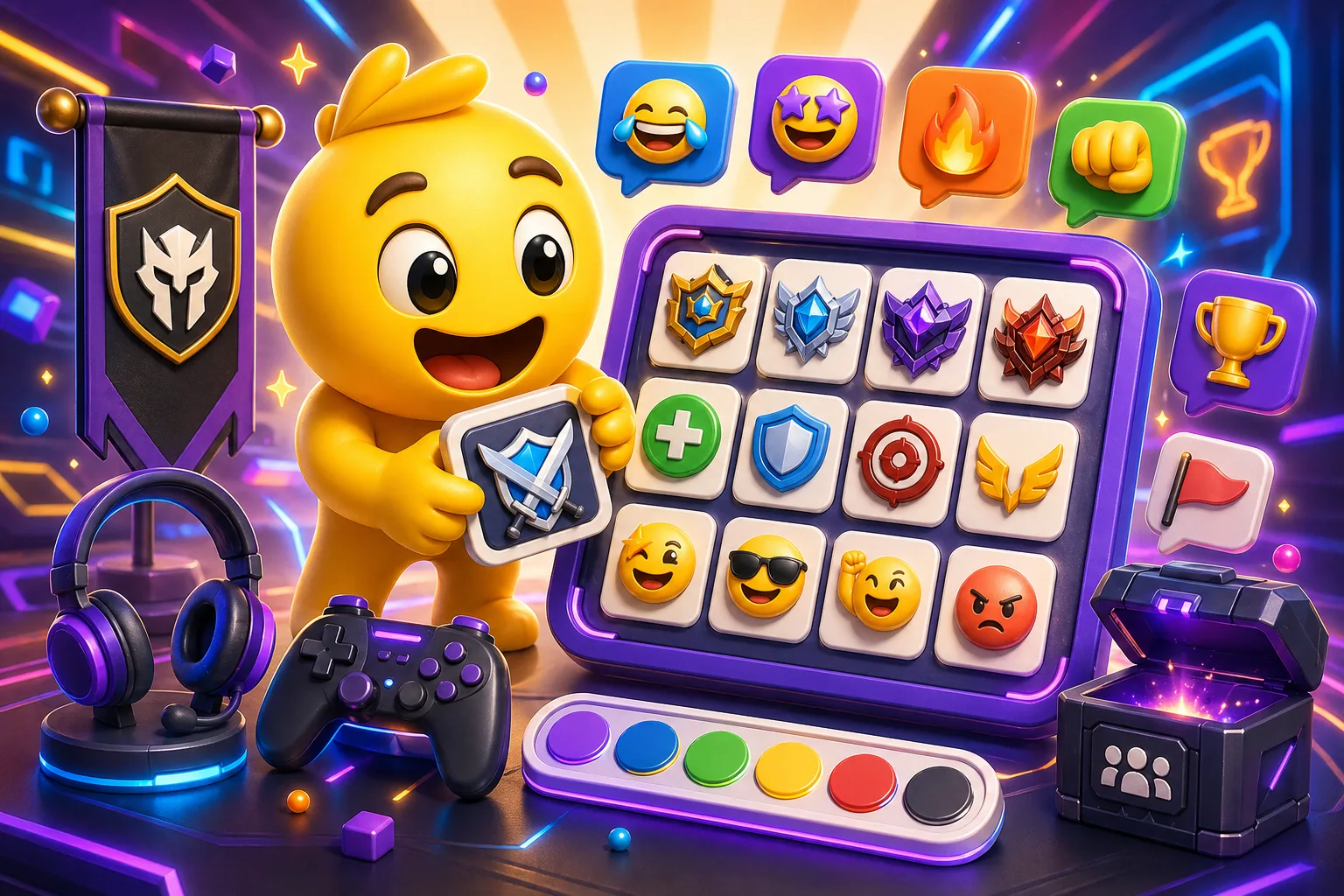
Creating a Gaming Clan Emoji Pack: Essential Emojis for Competitive Teams
Build a complete emoji set for gaming clans and esports teams: ranks, roles, match results, and more.
Your gaming clan's Discord needs emojis that actually serve a purpose beyond decoration. Rank badges that show hierarchy. Role indicators for who does what in-game. Match result markers that instantly communicate W or L. Status indicators for recruitment, practice schedules, and team availability. Here's the complete emoji set every organized gaming group needs.
Rank and hierarchy badges (your foundation)
Every gaming clan has a pecking order, and rank emojis make that hierarchy instantly visible. Start with your basic structure—recruit, member, veteran, officer, leader. Each rank gets its own emoji, usually incorporating your clan logo or colors with visual indicators of seniority. Bronze border for recruits, silver for members, gold for veterans, platinum for officers, diamond for leadership.
The visual progression should be obvious at a glance. If someone can't immediately tell that the diamond badge outranks the gold badge, your design needs work. Use consistent shapes across all ranks with different colors, materials, or effects to show progression. A shield that goes from wooden to iron to gold to glowing works. A star that gains more points as rank increases works. Completely different shapes for each rank doesn't work—there's no visual logic.
Make these your most polished emojis. They'll be used constantly in role assignments, channel permissions, and organizational charts. When new members ask "who's in charge?", you point to the diamond badge holders. When someone gets promoted, you spam their new rank emoji in celebration. These are your clan's identity markers.
Game role indicators (who does what)
Different games need different role systems, but most competitive games have similar archetypes. For FPS games, you need IGL (in-game leader), entry fragger, support, AWPer/sniper, and lurker. For MOBAs, you need top lane, jungle, mid lane, ADC, and support. For MMOs, tank, healer, and DPS. Whatever your game, create emojis for each role so people can quickly identify who plays what.
These work best as simple, recognizable icons. A crosshair for entry fragger. A shield for support. A scope for sniper. A sword for DPS. A health cross for healer. You want instant recognition, not detailed artwork. When organizing a match and asking "who can AWP?", people react with the sniper emoji. When looking for a healer for the dungeon, you ping the heal emoji.
Some clans add skill level variations—sniper bronze, sniper silver, sniper gold—to show proficiency within a role. This works for competitive teams where skill tiers matter for match assignments. For casual clans, it's overkill and creates too many similar emojis that clutter your list.
Match result and performance markers
After every match, you need quick ways to communicate results. A win emoji, loss emoji, and GG emoji are essential. Your win emoji should be celebratory—trophy, fire, checkmark with your colors, flexing arm. Loss emoji should be lighthearted, not depressing—it's a game. A sad face, "F" for respects, or "unlucky" symbol keeps it fun. GG emoji is neutral respect for both outcomes.
Beyond win/loss, performance indicators are useful for competitive teams. MVP emoji for standout players. Clutch emoji for game-saving plays. Ace emoji for 1v5 victories. Hard carry emoji for carrying the team. These get spammed in post-game channels when someone pops off, creating positive reinforcement and recognizing good play.
Some clans track statistics with streak emojis—three wins in a row gets the streak emoji, five wins gets the hot streak emoji. This gamifies your clan's performance and gives people something to chase beyond just winning individual matches.
Team status and availability indicators
LFG (looking for group) emoji lets members signal they're ready to play. LF1M (looking for one more) shows you need one player to fill a squad. Team full emoji indicates the squad is complete. These prevent the constant "anyone want to play?" messages in chat—people just react with the appropriate emoji.
Practice and scrim indicators organize your serious play. A practice emoji for casual team practice sessions. A scrim emoji for scheduled scrimmages against other clans. A tournament emoji for official competitive matches. This helps members understand the stakes and commitment level before joining.
Recruitment status emojis manage your clan's growth. Recruiting open shows you're accepting applications. Recruiting closed means you're at capacity. Trial member indicates someone's in their probation period. These set expectations and prevent confusion about whether new members can join.
Team and division markers
Large clans often have multiple teams or divisions. Team A, Team B, Team C need distinct emojis so members know which team is being discussed. Use your clan logo with different colors—red team, blue team, green team. Or use numbers—your logo with a "1" overlay for team one, "2" for team two. Consistency in design with clear differentiation in markers.
Game-specific divisions work for multi-game clans. Your clan has CS:GO, Valorant, League, and Rocket League divisions? Each needs an emoji. Usually this is the game's logo stylized in your clan's colors, or your clan logo with the game's icon incorporated. This lets cross-game members quickly identify which division posts are relevant to them.
Regional indicators matter for international clans. NA, EU, Asia, OCE emojis help with scheduling—nobody wants to wake up at 3 AM for a scrim. A simple flag or region abbreviation with your clan styling makes timezone coordination way easier.
Event and tournament badges
Major tournaments and leagues deserve special emojis. If your team competes in ESL, ESEA, or game-specific ranked systems, create badges for those leagues. Members can react with the league emoji when discussing that specific competition. It creates focus and makes it clear which league you're talking about when planning matches.
Championship and placement emojis commemorate achievements. First place, second place, third place emojis for tournament finishes. Season winner emoji for league championships. These become part of your clan history—"Team A got the gold emoji in Summer 2024" is clan lore. Pin messages with these emojis to celebrate milestones.
Event-specific temporary emojis work for special occasions. Your clan hosts an annual tournament? Make a custom emoji for that year's event. Participating in a charity stream marathon? Special charity emoji for that week. These create excitement around special events and can be retired afterward to keep your emoji list fresh.
Communication and coordination tools
Strategy and tactics emojis facilitate planning. Attack plan, defense plan, rotation indicators for competitive games. Map markers for specific locations or objectives. These turn your text channel into a tactical planning board where you can quickly reference strategies without typing paragraphs.
Ready check emoji for pre-match coordination. Team leader asks "ready?" and everyone reacts with the ready emoji. All five ready emojis = match starts. One missing = wait. This prevents the "is everyone here?" back-and-forth that wastes time before every game.
Timeout and break emojis manage session length. Someone needs a 5 minute break? React with the break emoji. Need to pause between maps? Timeout emoji. This keeps everyone informed without interrupting voice comms.
Social and community building emojis
Welcome emoji for greeting new recruits. Anniversary emoji for clan founding dates or member milestones. Birthday emoji for member birthdays. These soften the competitive intensity and build community beyond just winning games together.
Inside joke emojis emerge from clan history. That ridiculous play someone made that everyone still references. The time your IGL's cat walked across the keyboard and cost you the round. The catchphrase your support player says constantly. These become clan culture markers that only insiders understand, which strengthens group identity.
Building your starter pack (priority order)
Start with these 15-20 emojis:
- Rank badges (3-5): Recruit, Member, Officer, Leader at minimum
- Role indicators (4-6): The main roles for your game
- Win emoji, Loss emoji, GG emoji
- LFG emoji, Team Full emoji
- Your clan logo (main version)
- MVP or performance recognition emoji
That covers daily operations. Once those are established and being used regularly, add secondary emojis like event badges, strategy markers, or multiple team indicators. Don't frontload 50 emojis on day one—your members won't know what half of them mean. Build gradually as needs arise.
Test emoji usage for a month before making more variations. If your "officer" rank emoji has been used three times in a month, you don't need five different officer variations. If your "LFG" emoji gets used twenty times a day, consider making game-specific versions—LFG Ranked, LFG Casual, LFG Custom Games.
Keep your clan's visual identity consistent
All your emojis should feel like they belong to the same clan. Use your clan colors consistently. Use your clan logo or mascot elements across different emojis. If your rank badges use a shield shape, keep using shields for other emojis where it makes sense. If you use a particular art style for one emoji, use that same style for all of them.
This creates professional brand identity. When someone sees one of your emojis in another server, they should immediately recognize it as your clan's style. Consistency is what separates organized esports teams from random friend groups with emoji packs.
A well-designed emoji pack turns your clan Discord from a chat room into an organized command center. Start with ranks and roles, add match results and status indicators, then expand based on what your team actually uses. Create your clan emoji pack here →