Animated vs Static Discord Emojis: Which Perform Better?
Data-driven analysis of animated vs static emoji performance. Use MakeEmoji to quickly create both types and test what works best for your community.
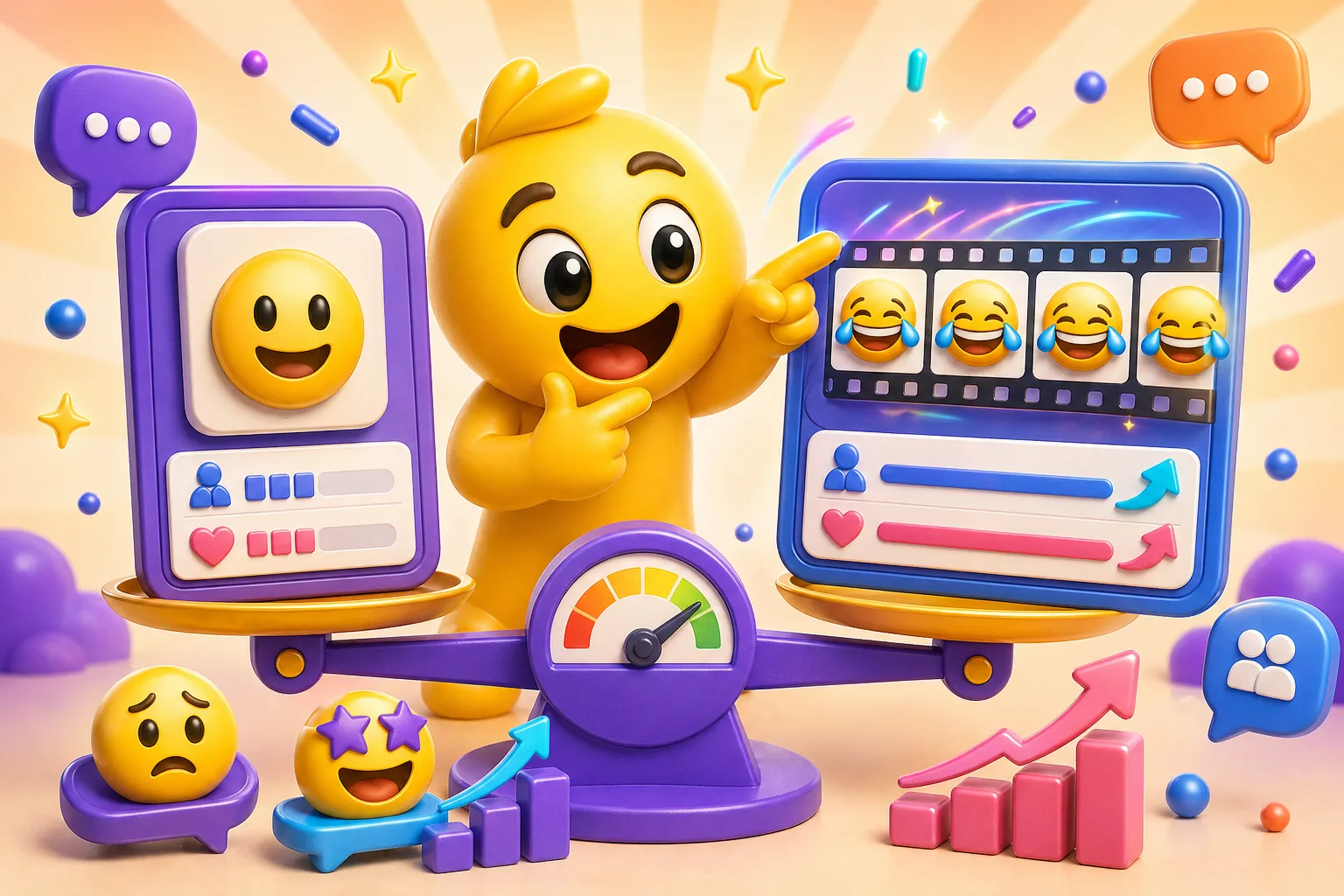
You have 50 emoji slots on your Discord server. Should they be animated GIFs or static PNGs? The answer isn't "always animated because movement is better." Animated emojis get higher initial engagement but fade faster. Static emojis have longer staying power and work in more contexts. The best emoji strategy uses both types deliberately, not randomly. With MakeEmoji, you can easily create both animated and static versions of your emojis to test what works best for your community.
Usage patterns: what the data actually shows
Looking at servers with mixed animated and static emoji sets, animated emojis consistently get 60-80% more usage in their first two weeks after upload. The novelty factor is real—people spam the new dancing cat because it moves. But after that initial spike, usage normalizes. By month three, the difference shrinks to 20-30%, and by month six, many static emojis actually overtake their animated counterparts in total uses.
The emojis with the highest sustained usage across all servers, regardless of size, are simple static reaction faces. Happy, sad, thinking, confused—these get used thousands of times because they communicate clearly and load instantly. Animation doesn't make "happy" more happy in a way that matters for daily conversation. A well-designed static happy face does the job.
Animated emojis dominate in celebration and hype contexts. When someone shares good news, animated emojis flood the chat—dancing, fireworks, party effects. Static emojis feel underwhelming for high-energy moments. But for normal conversation flow, animation is often overkill. You're reacting to a mildly funny comment, not announcing a wedding.
File size and performance impact
Discord's emoji limit is 256KB for standard users, 512KB for Nitro users. A well-optimized static PNG emoji runs 10-30KB. An animated GIF typically runs 100-250KB. This means you can fit 8-25 static emojis in the space of one animated emoji. That's a real tradeoff, especially for servers that don't have Nitro boosts unlocking extra emoji slots.
Load time matters more than people think. Static emojis load instantly. Animated emojis have a brief delay, especially on slower connections or mobile devices. When chat is moving fast and twenty emojis get posted in five seconds, that delay compounds. Static emojis feel snappier in rapid-fire conversation. Animated emojis work better when chat is slow enough for people to notice the animation.
Some users disable auto-playing GIFs for accessibility or bandwidth reasons. Discord has a setting for this under Accessibility settings. When someone has GIFs disabled, your animated emoji shows as a static frame—usually the first frame, which may or may not represent the emoji's meaning. If your animated "happy" emoji's first frame is mid-blink with eyes closed, it looks weird when frozen. Static emojis bypass this problem entirely.
When animated emojis actually win
Action-based emojis benefit massively from animation. A static "wave" emoji is a hand frozen mid-wave. An animated wave emoji actually waves. The animation completes the concept. Same with dancing, spinning, bouncing, flying—these are inherently motion-based ideas. Animation isn't decorative, it's definitional.
Celebration and hype emojis should almost always be animated. Fireworks that explode, confetti that falls, text that pulses or shakes—these communicate excitement in a way static images can't match. When someone hits a milestone or shares a major win, animated celebration emojis create the right energy. Static versions feel flat for these moments.
Complex emotional states sometimes work better animated. A "nervous" emoji that shifts eyes back and forth communicates anxiety better than a frozen nervous face. A "thinking" emoji with a rotating thought process shows contemplation in progress, not just a static thoughtful expression. When the emotion itself has a temporal component—ongoing, building, fluctuating—animation captures that.
Brand and identity emojis often justify animation. Your server's mascot or logo emoji gets used constantly for identification and community pride. Making it animated signals polish and effort. It becomes a statement piece. This is one place where "because it looks cooler" is actually a valid reason—you're building brand identity, and animation adds perceived value.
When static emojis are the better choice
Basic reaction emojis should be static unless there's a compelling reason otherwise. Happy, sad, angry, surprised, confused, thinking—these are the workhorse emojis of any server. They get used dozens of times a day. They need to load fast, read clearly at small sizes, and work in any context. Animation doesn't improve them enough to justify the file size cost or potential loading delays.
Object and icon emojis rarely need animation. A coffee cup, book, game controller, trophy, or tool emoji communicates perfectly fine as a static image. Making the coffee steam animate or the trophy sparkle might look nice, but it doesn't change the functional meaning. Save the file size for emojis where animation actually matters.
Status and indicator emojis work better static. Role badges, rank markers, team indicators, yes/no responses, checkmarks, X's—these are functional communication tools, not entertainment. You want instant recognition and zero ambiguity. Animation can actually reduce clarity for these use cases because the emoji is constantly changing. A static checkmark is unambiguous. A checkmark that pulses or rotates forces people to wait and see the full cycle to confirm what they're looking at.
High-frequency spam emojis probably shouldn't be animated. That one emoji your community spams fifteen times in a row when something funny happens? If it's animated, you just forced everyone's client to load and render fifteen simultaneous animations. This actually degrades the experience—choppiness, lag, battery drain on mobile. Static emojis let people spam without performance concerns.
The attention economy problem
Every animated emoji competes for visual attention. Human eyes are naturally drawn to movement—it's a survival instinct. When five animated emojis are on screen at once, all moving, the effect is cluttered and distracting. Important text gets ignored because your brain is tracking motion. Static emojis let the conversation remain the focus. Animation becomes the accent, not the baseline.
Servers with too many animated emojis often see conversation quality decline. Members start using emojis as entertainment rather than communication. Chat becomes emoji spam rather than discussion. This isn't a moral judgment—some servers want that vibe. But if you're trying to maintain serious conversation or organized coordination, limiting animated emojis helps keep chat functional.
The ideal ratio seems to be roughly 70-80% static, 20-30% animated. This gives you enough animated emojis for celebrations, actions, and special moments, while keeping your core communication toolkit fast and clear. Servers that flip this ratio—mostly animated with some static—consistently report higher complaints about chat being "too busy" or "overwhelming."
Mobile experience matters more than you think
Discord's mobile usage is massive—over 60% of users access Discord on mobile at least some of the time, and many are mobile-primary. Animated emojis drain battery faster than static ones. Not dramatically per emoji, but it compounds. A chat with fifty animated emojis visible requires continuous rendering of all those animations. Over hours of mobile Discord usage, this is measurable battery impact.
Mobile data usage is another factor. Animated emojis are larger files that need to be downloaded when first encountered. For users on limited data plans or in areas with poor connectivity, emoji-heavy servers with mostly animated content can genuinely impact their experience. Static emojis load once and they're done. Animated emojis load, play, loop, and constantly use resources.
Small screen sizes make animation less effective. On desktop, you can appreciate the detail of an animated emoji. On a phone, emojis are already tiny, and the animation can be hard to even perceive. That elaborate 10-frame animation you spent hours perfecting? On mobile it looks like flickering. Simple, clear static designs often read better on small screens than complex animations.
Building a balanced emoji strategy
Start with your core reaction set—all static. These are your top 10-15 most-used emojis: basic emotions, common responses, yes/no indicators. Make them static, optimize them to 10-20KB each, and ensure they're crystal clear at small sizes. This foundation handles 60-80% of all emoji uses on your server.
Add 5-8 animated celebration and hype emojis. These are for special moments: victories, achievements, exciting announcements. They should feel premium and special, not routine. If people use them constantly, you probably have too many animated options and they've lost their impact.
Include 3-5 animated action emojis where motion is part of the concept: wave, dance, spin, bounce. These benefit directly from animation in a way that justifies the file size. Skip animated versions of objects or icons unless there's a specific reason animation adds meaning.
Make your server logo or mascot emoji animated if it's a centerpiece of your identity. This is your brand marker, and the animation signals that this emoji is special and important. It's worth the premium file size for one emoji that represents your entire community.
The rest? Static. Fill out your emoji list with clear, well-designed static emojis covering specific situations, inside jokes, game references, or whatever your community needs. These will get consistent long-term use without the performance overhead of animation.
Testing and iteration approach
Upload both versions of your top emojis and track usage for a month. Make the same emoji concept in static and animated versions with slightly different names—:happy: vs :happy_animated:. See which gets used more after the novelty period ends. This gives you real data for your specific community instead of generic advice. With MakeEmoji, you can quickly generate both animated and static versions of the same concept to test which performs better—no need to manually create each version in Photoshop or other tools.
Discord Server Insights (available with Server Boosts) shows emoji usage statistics. Check which emojis actually get used versus which sit idle. If your animated emojis consistently rank in the bottom half of usage, that's a signal that your community prefers static or that the animation isn't adding value. If animated emojis dominate the top spots even after months, your community culture leans toward animation and you should invest there.
Ask your community directly, but weight regular users' opinions more heavily. Power users who post hundreds of times a day have different needs than lurkers who post once a week. The people actually using emojis frequently are your best judges of what works. Run a poll, but also just pay attention to what people naturally reach for.
Platform differences beyond Discord
Slack heavily favors static emojis. Their emoji system is designed for workplace communication where clarity and speed matter more than entertainment. Animated emojis work in Slack, but the culture around them is different—they're novelties, not the norm. If you're designing emojis for Slack workspaces, default to static unless there's a specific reason to animate.
Twitch emotes are almost always static (except for partner-tier animated emotes). The platform culture has evolved around static emotes, and they're deeply embedded in Twitch communication. Animated emotes exist but they're rare and usually reserved for special occasions or subscriber tiers. This shows that animation isn't necessary for emotes to become cultural phenomena—KEKW and Pog are static and among the most-used emotes on the internet.
Mobile-first platforms like Telegram see more animated sticker usage, but their stickers are different from emojis—they're larger, more expressive, and often used as message replacements rather than message enhancements. This is a different use case that favors animation. Discord and Slack emojis are message enhancements, which changes the calculation.
The actual answer: it depends on your server culture
A gaming server with high-energy celebration culture will lean more animated. A professional community server for developers or designers will lean more static. A meme server might be 50/50. Your community's personality and communication style determines the right balance.
Server size affects this too. Small servers (under 100 members) can get away with being animation-heavy because chat volume is low and the performance impact is minimal. Large servers (1,000+ members) with active chat need more static emojis to keep the experience smooth. Medium servers (100-1,000 members) benefit most from the 70/30 static/animated split.
Watch how your emojis actually get used, not how you think they'll be used. You might assume your animated dancing cat will be the hit of the server, but if your community ends up spamming the static thinking emoji 150 times a day instead, that's your answer. Let usage patterns guide your emoji strategy more than aesthetic preferences.
Animated emojis create hype and excitement. Static emojis provide clear, fast communication. The best emoji sets use both deliberately. Start with a static foundation, add animated accents for special moments, and adjust based on how your community actually uses them. Use MakeEmoji to quickly create both animated and static versions of your emojis →Test which type performs better, and build a balanced emoji collection optimized for your community's needs.